
Dog Dance Membership
You’ve been here: a song you love comes on and you shimmy toward your dog, who may look at you like you’re a little weird.
What if they didn’t? What if they lit up and moved with you instead?
Trade commands for choreography. Our online dog dance membership lets you start your first duet with your dog today.
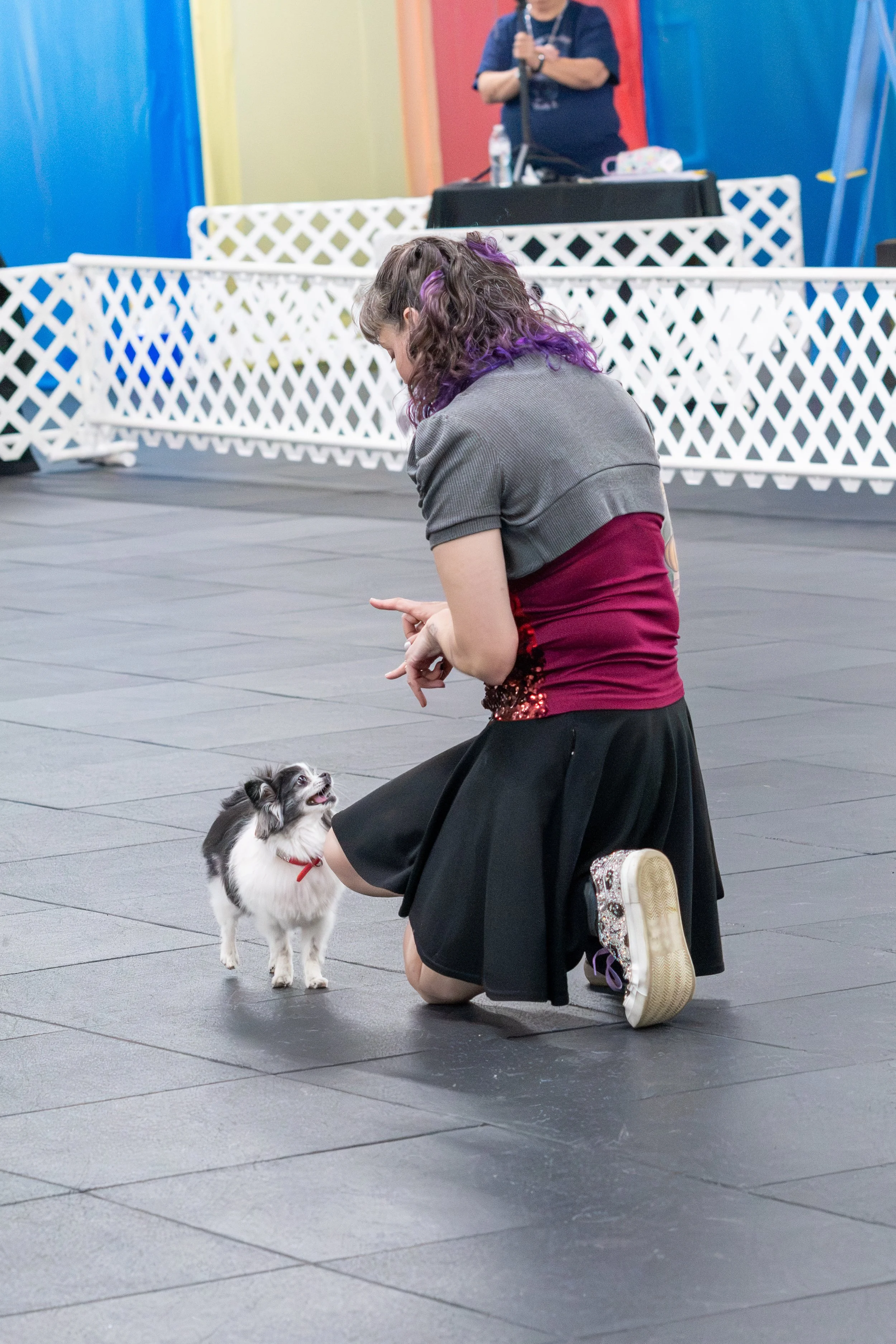
Most training asks your dog to comply. Dance asks you to pay attention.
Your dog already has a pace, a way of moving through a room, things they offer you unprompted that have nothing to do with obedience. This starts there: not with a trick list, with noticing.
From noticing, you build a dance together: heelwork, spins, a shared vocabulary that moves the two of you from one moment to the next. Then you put it to music and see what the two of you create when you’re partners.
This is where that happens. Not a single course. Not a one-time workshop. A membership you keep coming back to, for as long as you're both dancing.
You'll sign a quick waiver first, then head to checkout.
Have more fun with your dog, on purpose
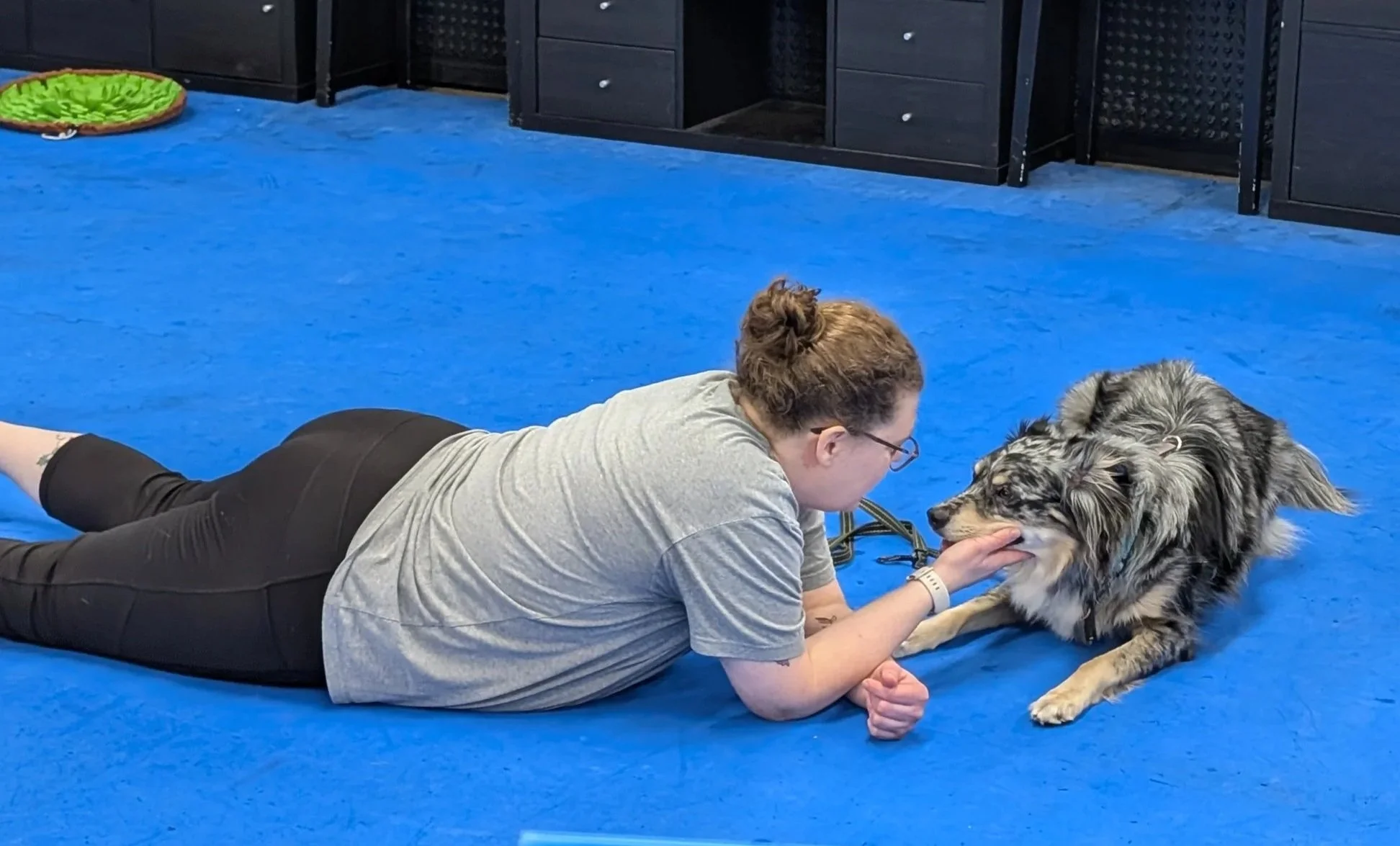
Various dogs follow their guardian back and forth across a carpet, matching pace and turns.
What does dancing with your dog actually look like?
You map a routine.
You rehearse it and it’s messy, then less messy.
You perform it, or title it…
…or never show another living soul and dance it in your living room on a Tuesday, because this was never about the audience.
“The best case scenario is you and your dog have a new activity to bond over. The worst case is you play with them for an hour. Seems like a low risk / high reward to me."
— Tony & Gizmo
Gizmo runs and jumps through his guardian's arms, landing on the other side.
What’s Included
When you're a member of our dog dance community, everything here is available to move through at your own pace. We recommend you start with Starting Steps if you're new, then jump to whatever you feel drawn to next.
-
Everything here is self-paced and online. Watch, rewatch, pause mid-video to rewind your dog. No class time to build your days around.
-
The foundation skills you need to dance with your dog. Not because you have to, but because the noticing has to come before the choreography, or the choreography doesn't mean anything.
-
Get all the skills you need to create and choreography your own dog dance. Learn to read what your dog offers, build a vocabulary from it, put it to music that's actually yours.
-
Learn whole routines inspired by specific songs. These ready-to-learn lessons take you through each step if you'd rather start dancing than start building. The full choreography library is always growing.
-
A growing collection of moves and transitions to pull from whenever you need one. The tricks library grows as the membership does.
-
Take the Floor is our 1:1 coaching option, available if you want more hands-on help. Send a video, get it back with real feedback. Purchased as a set of 3 or 5 submissions, at a discount for members — for when self-paced isn't quite enough.
Available Memberships
Founding Member
For anyone joining as the membership grows. Your rate locks in for as long as you're a member — no increase later, even as everything else does. Includes Starting Steps, Build Your Own Dog Dance Routine Workshop, the Choreography Library, and the Tricks Library — plus everything added as the membership grows. Take the Floor (1:1 coaching) available as an add-on, at a discount for members.
Member
The standard rate once the Founding Member window closes. Includes the same full membership — Starting Steps, the Choreography Library, and the Tricks Library — plus everything added as the membership grows. Take the Floor (1:1 coaching) available as an add-on, at a discount for members.
You'll sign a quick waiver first, then head to checkout.
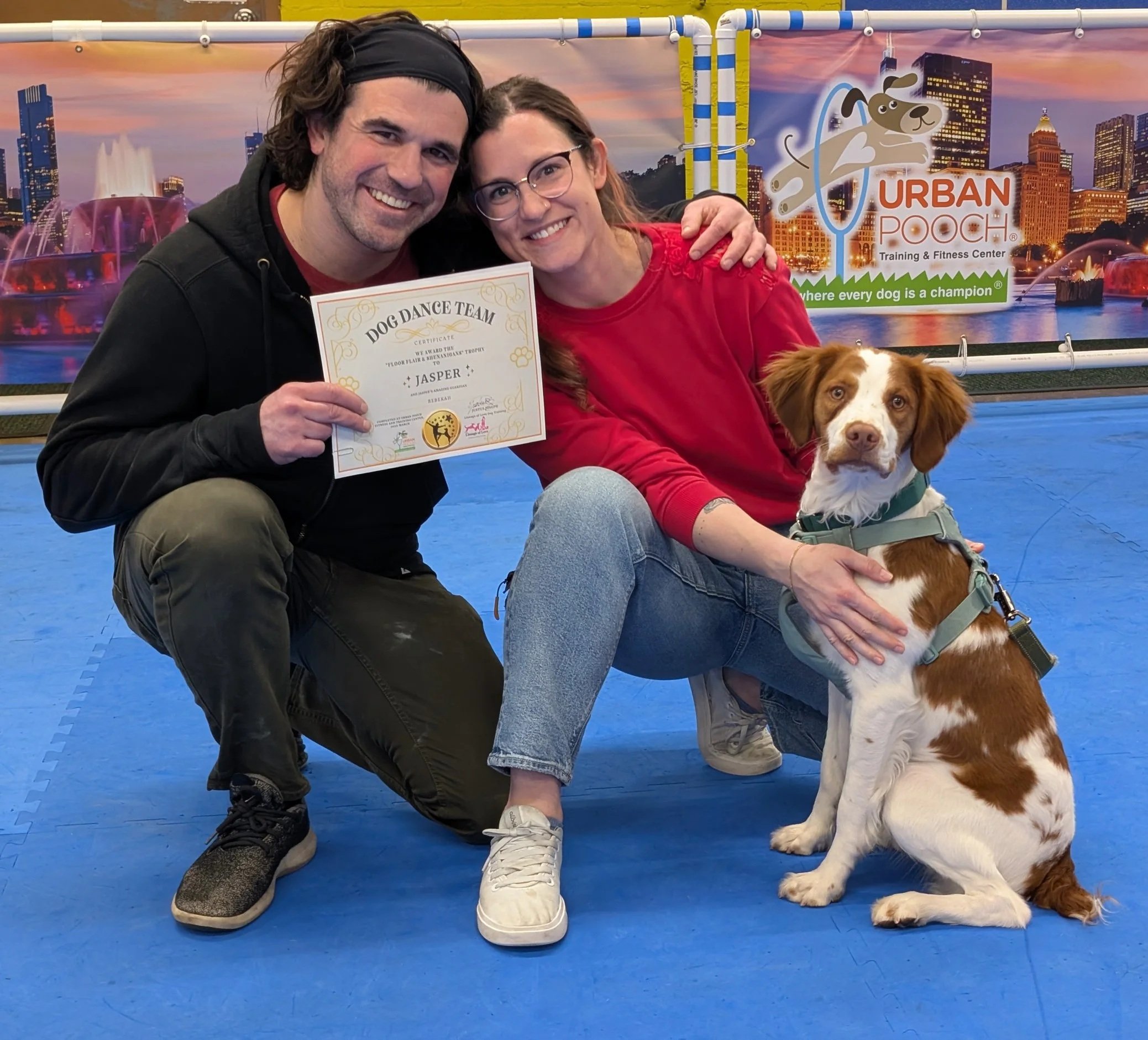
"Dog dance did end up being silly, but in the most rewarding way possible. It was such a fun way to connect with my dog in a way that other sports haven’t offered yet."
— Rebekah & JasperFrequently Asked Questions: About You
-
This is exactly where to start. Foundations doesn't assume any prior experience — it starts with noticing what your dog already offers, not with a trick list.
-
No. You need a dog and a willingness to move. Everything here starts from what your dog already offers, not from a background in movement.
-
Titling is entirely optional, but if you want to pursue it, two organizations offer paths in canine freestyle: the Musical Dog Sport Association (MDSA), which titles through online video events you can enter from home, and the World Canine Freestyle Organization (WCFO), which offers both in-person titling events and monthly video-based titling you can complete without traveling. Justus can help you figure out which path fits your dog and your goals — send her an email justus[at]lineageoflovedogtraining.com to get started.
-
No. Titling is optional and covered in the membership if you're curious about it, but nothing here requires it. Plenty of guardians never title and still build something worth keeping.
-
As much or as little as you have. There's no pace to keep up with — the library is there when you want it, and it stays there.
Frequently Asked Questions: About Your Dog
-
No specific skill level is required. If your dog can offer basic behaviours — a sit, a hand touch, walking with you — you have enough to begin. The membership meets your dog where they are.
-
No. Choreography is built around your dog's actual movement, not a standard your dog is supposed to meet. Older dogs, dogs with physical limitations (including blind, deaf, blind & deaf, mobility challenged), and dogs of any breed can dance — what changes is the choreography, not whether they belong here.
-
Some movements — anything with paws off the floor — should wait until your puppy’s growth plates close, which varies by size: small dogs around 12 months, large dogs around 18, giant breeds 24 or more.
-
That's information, not a problem to fix before starting. The membership is built around observing what actually motivates your dog and working from there — not forcing a method that doesn't fit them.
-
No. Dance asks you to pay attention to each other. Obedience asks your dog to comply. Different relationship, different result.
-
Yes. Justus offers AKC Trick Dog evaluations, Novice through Intermediate. Titling details are in the Tricks Library.
Frequently Asked Questions: About the Membership
-
The Tricks Library, the Full Choreographies library, and ongoing content added as the membership grows. Live Seasonal Classes and Take the Floor async coaching are separate, paid add-ons for guardians who want more structure or feedback — the core membership doesn't require either.
-
No. Our 1:1 coaching programs is called Take the Floor and is a separate, optional purchase (3 or 5 submissions, at a discount for members).
Membership gets you the self-paced library; Take the Floor gets you 1:1 feedback whenever you want it.
-
Not required, but recommended. Foundations covers the skills you need to dance with your dog; the noticing has to come before the choreography, or the choreography doesn't mean much. Everything else is yours to move through in whatever order you're drawn to.
-
No. Live classes are separate from the membership. They are priced and scheduled separately, capped at 8 people. Membership is fully self-paced, with no live component and no schedule to keep.
-
Founding members lock in $45/month for as long as they stay subscribed. Standard pricing is $65/month. Both include a 20% discount if you pay annually. Founding pricing won't be offered again once the founding period closes.
-
Commercially released songs. Because of copyright, recordings aren't included inside the lessons — you'll stream the track yourself from Spotify, Apple Music, or wherever you already listen. Full detail is on the Music Usage page.
-
Yes! We’re always expanding the library with fresh content. The Tricks Library grows over time, and new choreographies get added as they're built. Nothing here is meant to feel finished; it grows with the membership.
-
Yes. Memberships are flexible and can be canceled at any time from your account. You’ll retain access through the end of your current billing cycle, and you won’t be charged again.
-
No. Membership is non-refundable. You can cancel your membership at any time. Cancellations take effect at the end of the current billing period rather than mid-cycle.
-
You can reach us anytime through our contact page or email; we'll get back to you as soon as we can.
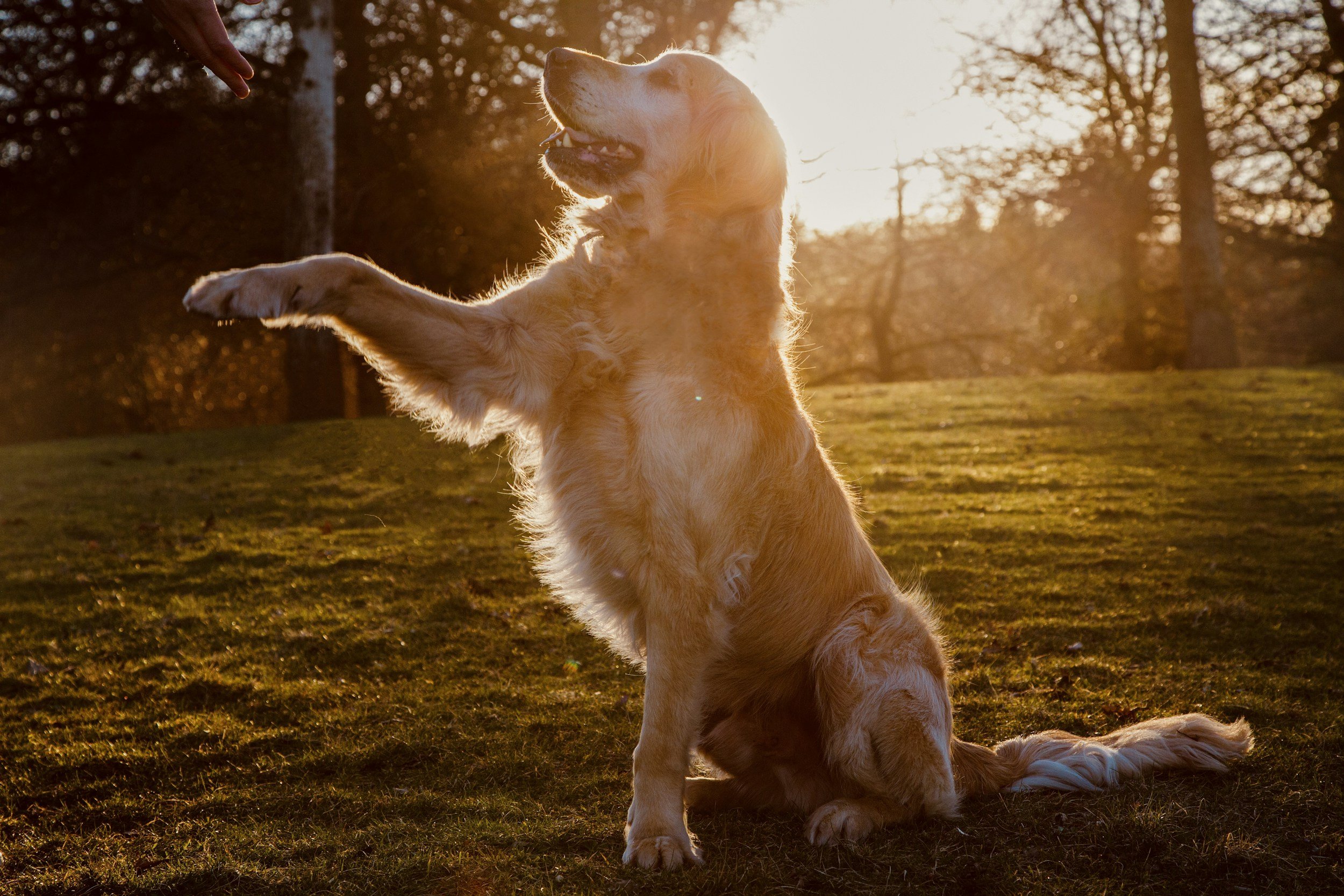
Why ask for sit when you could have the next dance?
A new routine every month — full choreography, broken down frame by frame, so you always know what step comes next
A trick library that builds the foundation — the movements every routine draws from, taught before you need them
Take the Floor — send in your video, get feedback on your own dance, at your own pace (optional)
Dance Cards — a guided path suited to where you and your dog are starting from, including paths built for senior dogs and for dogs and handlers with varied physical circumstances
Seasonal challenges — a reason to put a routine on video and see it through
Inside the Dog Dance Membership
You don't get forever with your dog. Make it count.
You'll sign a quick waiver first, then head to checkout.
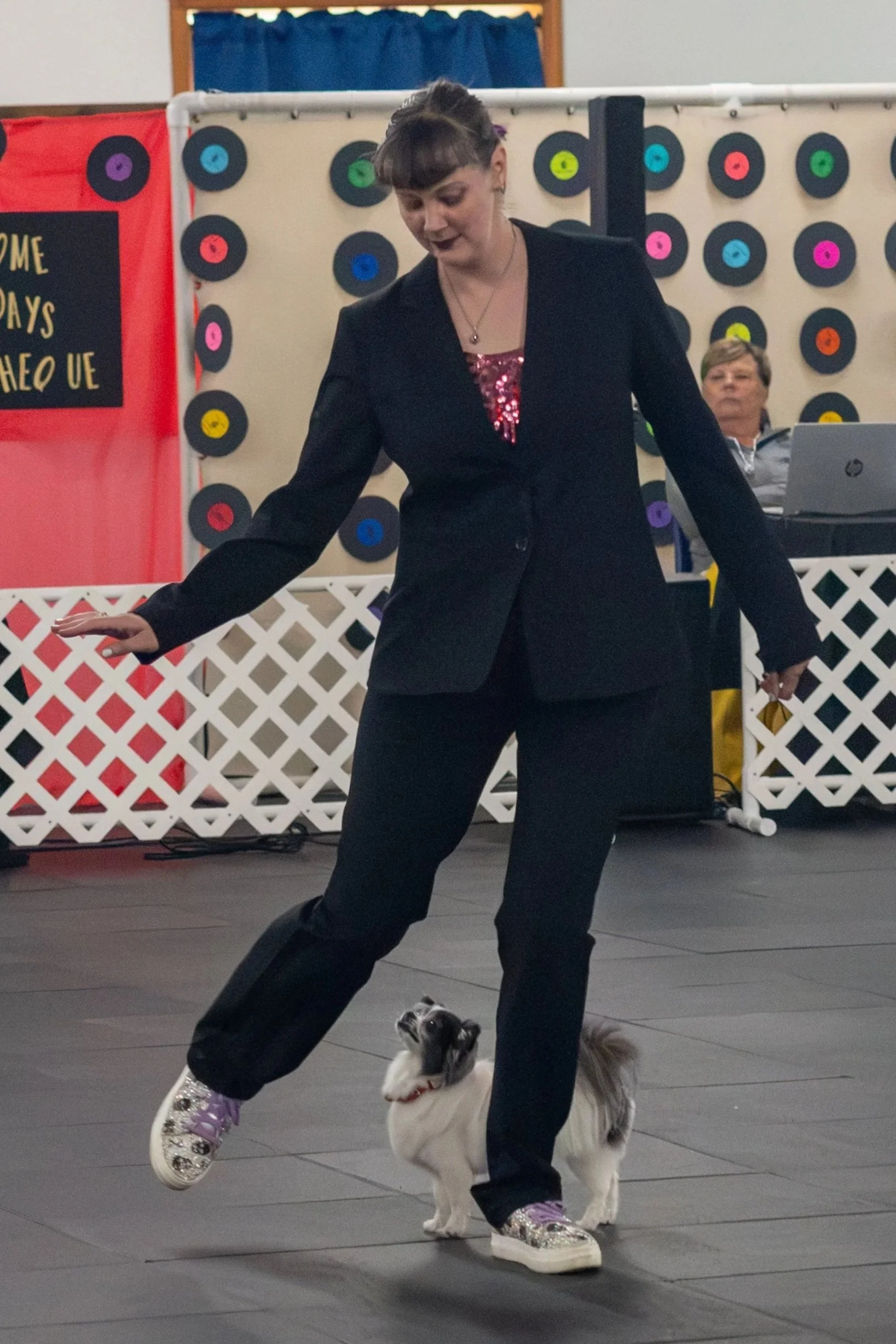
Brontë, a small papillon mix, moves with her guardian as they dance together.
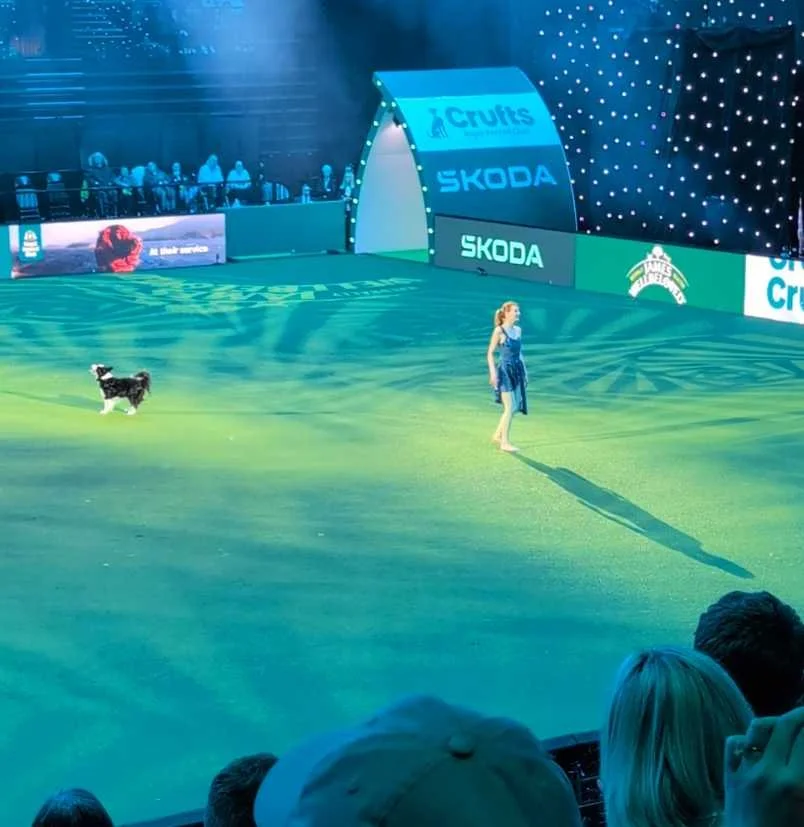
You've probably seen it: a dog and their person moving together like twin stars.
Like they already know what the other is about to do. Like the music was written with both of them in mind.
That's dog dance. And it's learnable.
Who It's For
You might be exactly who I had in mind.
You're not necessarily someone who grew up doing dog sports. You might not even think of yourself as athletic. You're the person who loves their dog in a way that feels almost too big for regular life.
Dog dance tends to find people who:
Have tried training that felt more like management than relationship
Want to do something with their dog before the time runs out
Have a song that makes them think: we could dance to this
Suspect their dog has more in them than they've been asked to give
Have been waiting for permission to begin
If any of that sounds like you, you're in the right place.
A note for the reactive dog parent:
This isn't only for dogs who are easy in groups. If yours gets overwhelmed around other dogs, or needs more room than a typical class assumes, that's not a disqualifier — it's just information to work with. My own dog, Brontë, is vocal and not built for crowded rooms, and I compete with her anyway. It's some of the most honest work I do. Dog dance isn't about teaching your dog to ignore the room; it's about giving the two of you something to focus on instead.
You'll sign a quick waiver first, then head to checkout.
What This Actually Is
It's a sport. It's also something else.
Canine freestyle is a competitive dog sport with titles, judges, and real technical depth. But the reason people stay — the reason I built a whole business around it — is simpler than that.
When you dance with your dog, you stop asking your dog to comply, and you start asking them to collaborate. The choreography is almost beside the point. What you're really building is a new kind of attention between you, one that allows your dog to participate in your shared relationship as an equal partner.
Available Memberships
Founding Member
For anyone joining as the membership grows. Your rate locks in for as long as you're a member — no increase later, even as everything else does. Includes Starting Steps, Build Your Own Dog Dance Routine Workshop, the Choreography Library, and the Tricks Library — plus everything added as the membership grows. Take the Floor (1:1 coaching) available as an add-on, at a discount for members.
Member
The standard rate once the Founding Member window closes. Includes the same full membership — Starting Steps, the Choreography Library, and the Tricks Library — plus everything added as the membership grows. Take the Floor (1:1 coaching) available as an add-on, at a discount for members.
You'll sign a quick waiver first, then head to checkout.
What It Looks Like in Practice
Here's what we actually do.
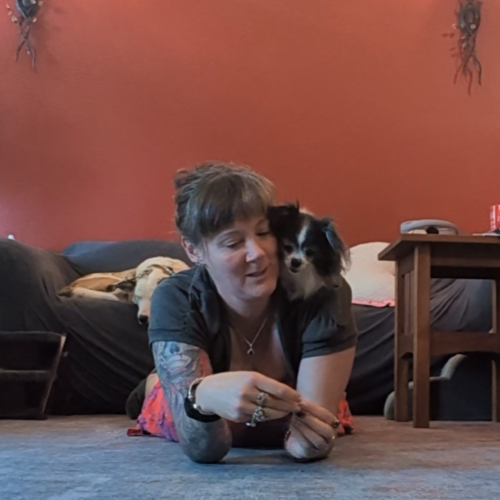
Every dog dance journey starts with the same thing: learning to notice. What does your dog offer naturally? What do they love? What's their pace, their style, their personality on the floor?
From there, you build a vocabulary of moves: heelwork, spins, distance work, tricks that become transitions. And eventually, you put it to music. You find a song that fits your dog. You map it. You rehearse it. You perform it, or you title it, or you just do it in your living room because it's yours. 💛
My dog Brontë is opinionated, medium-paced, and deeply unimpressed by shortcuts. She's been my best teacher. You'll meet her in the choreography videos.
You'll sign a quick waiver first, then head to checkout.

Available Memberships
Founding Member
For anyone joining as the membership grows. Your rate locks in for as long as you're a member — no increase later, even as everything else does. Includes Starting Steps, Build Your Own Dog Dance Routine Workshop, the Choreography Library, and the Tricks Library — plus everything added as the membership grows. Take the Floor (1:1 coaching) available as an add-on, at a discount for members.
Member
The standard rate once the Founding Member window closes. Includes the same full membership — Starting Steps, the Choreography Library, and the Tricks Library — plus everything added as the membership grows. Take the Floor (1:1 coaching) available as an add-on, at a discount for members.
You'll sign a quick waiver first, then head to checkout.
About Titling
If you've been curious about titles, let me make it less mysterious.

There are three main titling bodies accessible to dog dance teams in North America, and between them there's an entry point for every level.
MDSA — Musical Dog Sport Association
The most accessible starting point for new teams. The MDSA Canine Freestyle Fun Award is exactly what it sounds like: any video of you dancing with your dog can qualify. You don't need a polished routine or a filming session. If you have something — or think you might — and you're not sure whether it's enough, just ask me.
WCFO — World Canine Freestyle Organization
Titles at every level from beginner through elite. WCFO events are held in person and judged live, with monthly online titling options available as well — making it one of the most accessible paths to a title regardless of where you're located.
CFF - Canine Freestyle Federation
Known for its focus on musical interpretation and artistic expression alongside technical skills. A good fit for teams who want their choreography to tell a story.
Not sure which is right for you? Start with the MDSA Fun Award and go from there. Most teams explore more than one.

Dance With Me
However you learn best, there's a way in.
Dog Dance Membership
Trade commands for choreography. Tricks, choreography, and a First Duet path from your very first session together — plus the community and Take the Floor submissions to keep you moving forward.
In person — Chicago
Weekly classes and occasional workshops at Urban Pooch and Bosly's Backyard. Real-time feedback, floor time with your dog, and a room full of people who take loving their dogs seriously and laugh a lot.
See what's coming up →Foundations of Dog Dance
A self-paced course teaching the training style, body language, and connection that make dog dance work. Includes a short routine to finish with.
Start the foundations course →Building Your Own Routine
A recorded webinar walking through the full choreography process — choosing music, mapping movement, making it yours. Pause, return, or use it as a reference as you build.
Get the workshop →Async Video Feedback
Send footage of you and your dog. Get a detailed written response: what's working, what to adjust, where to go next. No scheduling, no performance pressure — just honest eyes on your work. $85 for three submissions, $125 for five.
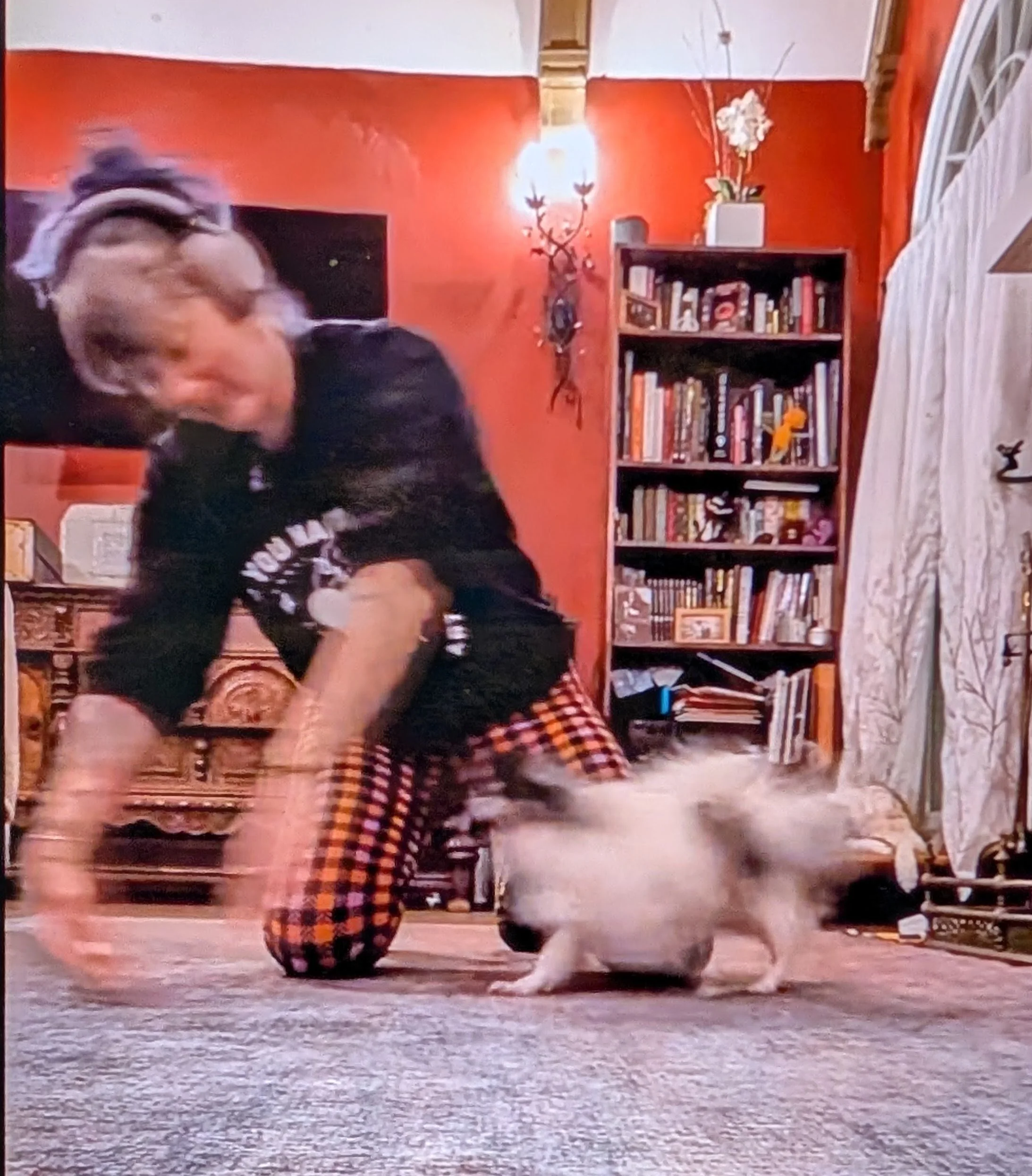
Get async feedback →Dogs and their guardians spin together in opposite directions.
You don't get forever with them. Make it count.
You'll sign a quick waiver first, then head to checkout.